
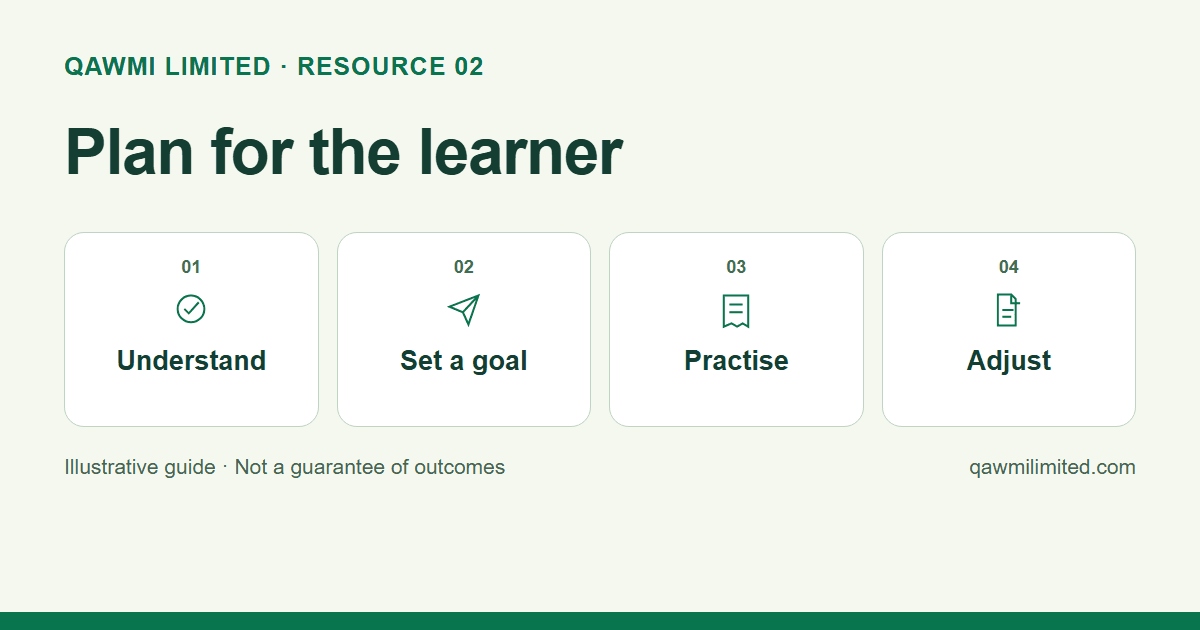
Children do not all learn Quran reading, Tajweed, duas, or Islamic studies in the same way or at the same speed. Age, previous experience, home language, confidence, and attention all shape what a learner can do in a lesson. Personalized teaching responds to those differences instead of assuming one sequence will suit everyone.
Personalization does not mean lowering expectations or changing foundational knowledge for each child. It means choosing a suitable starting point, explaining clearly, adjusting the amount of practice, and checking understanding before moving forward. Used well, it can help a young learner experience both appropriate challenge and achievable success.
The lesson can begin at the right point
A child who already recognises Arabic letters should not spend weeks repeating material they have mastered, while a beginner should not be rushed into joined words without a foundation. In a personalized class, the teacher can listen first, identify a small number of priorities, and build the next lesson around them. This reduces both boredom and confusion.
- A beginner can receive more repetition and visual support.
- A developing reader can focus on recurring pronunciation mistakes.
- A confident learner can work on fluency, meaning, or deeper application.
- Targets can be reviewed when the learner's needs change.
Feedback becomes immediate and specific
Young learners benefit when correction is close to the moment of practice. A teacher can model a sound, ask the child to try again, and explain one improvement without overwhelming them with every mistake at once. Specific feedback—such as where a letter is articulated or which rule applies—gives the child something concrete to practise before the next lesson.
- Correct one or two high-impact issues at a time.
- Balance correction with recognition of what improved.
- Ask the child to explain or demonstrate the new point.
- Give a small home task connected directly to the lesson.
Pacing can protect motivation
If material is always too easy, the learner may disengage; if it is consistently too hard, they may associate the subject with failure. Personalized pacing allows the teacher to shorten a task, add another example, revisit a prerequisite, or extend a topic when the child is ready. The goal is steady learning, not finishing a book as quickly as possible.
The teacher can respond to the whole learner
Children bring emotions and circumstances into class. Tiredness after school, nervousness about reciting aloud, limited English or Bangla vocabulary, and different attention spans can all affect participation. A responsive teacher can use shorter activities, gentle prompts, visual cues, or a change of pace while still maintaining clear boundaries and learning goals.
- Agree on a lesson length appropriate for the child's age.
- Use simple explanations in a language the child understands.
- Build predictable opening and closing routines.
- Tell parents about patterns that affect learning, not every minor mistake.
Parents receive more useful information
Personalized teaching works best when parents know the current goal and the kind of support expected at home. A concise update can explain what was covered, one improvement, one area to practise, and what comes next. This helps families support learning without trying to become the teacher or placing unnecessary pressure on the child.
A practical next step
Personalized Islamic classes can make learning more relevant, focused, and encouraging when they combine sound subject knowledge with patient teaching. Families should still look for clear curriculum, qualified educators, safeguarding, and regular review. Personalization is most valuable when it leads to measurable progress and a healthier long-term relationship with learning.